Harnessing the wind: business opportunities abound as offshore wind projects set for major growth
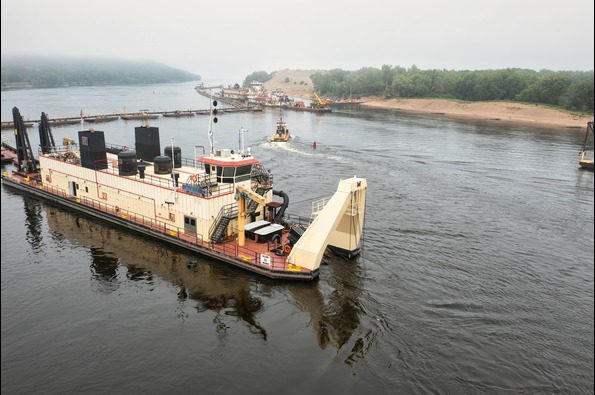
Tom Fisk, dredger. Credit: PEXELS
Offshore wind farms are poised to expand rapidly over the next decade due to falling costs and technological advancements. This surge will drive a substantial demand for dredging services worldwide, essential for preparing seabed sites for turbine installations and cable laying, while ports will require significant infrastructure upgrades.
For years, offshore wind has been a critical component in the transition to sustainable energy, often seen as more reliable than onshore wind. In 2023, operational offshore wind capacity rose to nearly 68 GW. The 2023 Global Offshore Wind Report forecasts over 380 GW of additional capacity within the next ten years, with the UK, Norway, Portugal, China, and Japan at the forefront.
Rebecca Williams, Head of Global Offshore Wind at the Global Wind Energy Council (GWEC), states in the report: “Plans are in place for offshore wind to provide large-scale renewable energy on every continent except Antarctica.” She highlights significant developments in markets including Bangladesh, Vietnam, South Korea, the Philippines, and Australia. Offshore wind is advancing swiftly, driven by a notable decrease in the global levelized cost of electricity (LCOE) and technological improvements, such as larger turbines and longer blades, enhancing its green credentials and ensuring greater energy security.
The National Renewable Energy Laboratory (NREL) emphasises the importance of strategic port development in its report, Impacts of Developing a Port Network for Floating Offshore Wind Energy. Planning requires determining the number of ports needed for each phase (manufacturing, installation, operation) while considering local communities, environment, workforce, and the industry as a whole. This ensures optimised port network investments.”
Fair winds ahead
The port of Esbjerg's leading position in offshore wind is driven by its strategic location and the rise of the offshore market. Over the last decade, offshore wind has become the port's largest business area, and with the sector investing in ever larger turbines it has driven a need for the port to be equipped to deal with bigger trucks, cranes and vessels transporting them.
Speaking to CEDA Industry News, Jesper Bank, Chief Commercial Officer, noted, "Offshore wind is an immature industry. There's a continuing scaling up of turbines which hasn't levelled yet. To follow this industry, you must be heavily engaged with everyone in the industry, including truck companies and owners of jack-up vessels. We spend a tremendous amount of time talking to the industry to understand the needs."
To mitigate capacity issues, Port Esbjerg has partnered with five EU ports and deployed digital twin technology to simulate and plan future projects, potentially tripling its offshore wind handling capacity.
Bank also discussed the significant infrastructure investments needed to keep pace with the offshore wind sector. The port is deepening its channel from 10.5 to 12.5 metres to accommodate larger vessels. "This decision, in part driven by offshore wind, also supports larger ro-ro vessels and attracts more activities," he said.
Dredging has a vital role to play in supporting modern ports’ evolving needs. And it isn’t just deepening and widening channels that is required for those moving into offshore wind, but maintenance dredging too. Bank noted that the use of larger jack-up vessels for turbine installation introduces additional challenges concerning seabed and quayside integrity. These vessels exert considerable pressure on the seabed, potentially penetrating up to 10 metres deep, which can jeopardise the stability of quayside structures. To address this, Esbjerg employs specialised dredging techniques and seabed reinforcement strategies, such as constructing stone beds.
Moving with the tide
The offshore industry operates in a complex and dynamic environment, facing significant challenges in achieving precise excavation. While traditional dredging methods are effective, they can sometimes result in sediment release and increased turbidity, impacting marine ecosystems. Green projects, like offshore wind farms, aim to maximise their positive environmental impact, making marine protection a priority. This focus is driving the development and adoption of new, innovative methods that minimise these effects and support such project’s broader environmental goals.
Given the variety of seabed conditions, from soft sediments to hard substrates, there is a need for adaptable excavation methods. Hopper dredgers are indispensable in advancing offshore wind farms, offering vital services throughout their lifecycle. They excel in tasks such as dredging and transporting sediments, which are essential for site preparation and maintenance, as seen in the 2019 Hornsea Project One in the UK, ensuring stable foundations for turbine installation. Hornsea was the world's first offshore wind farm to exceed 1 GW in capacity and produces enough green energy to power well over one million homes.
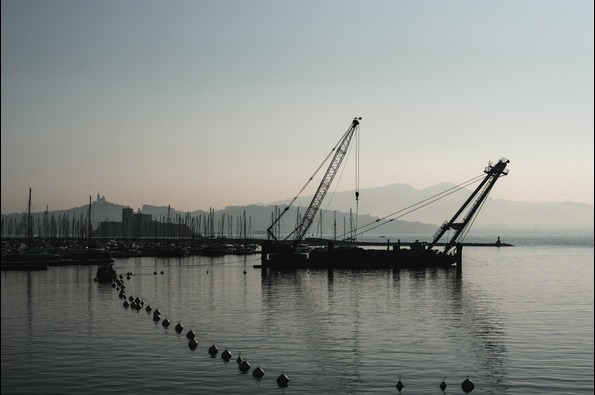
Dredger next to a Pier, Nadine Ginzel. Credit: PEXELS
Additionally, they can be used to create trenches for underwater cables, facilitating the connection of turbines to the power grid with minimal environmental impact, exemplified by their work at 2020 Germany's Deutsche Bucht offshore wind farm, reducing the annual CO2 emissions of Germany by 700,000 tons.
Precision navigation is essential for successful offshore wind projects. Advanced Global Navigation Satellite System (GNSS) receivers, gyrocompasses, and inclinometers are used to monitor the positioning, heading, and verticality of wind turbine foundations and structures. These technologies, integrated with solar-charged batteries, ensure continuous and accurate monitoring despite challenging conditions. For instance, in the Fécamp Offshore Wind Farm project off the coast of northern France, precision navigation was critical for installing concrete Gravity Based Structures (GBS), ensuring the stability of wind turbines.
Behind the boom
While the booming offshore wind industry opens up numerous opportunities for dredging contractors, balancing dredging activities with environmental concerns is critical. Rebecca Williams points out further challenges such as inflation, increased capital costs, and supply chain issues that may slow down or hinder projects. Inefficient permitting and licensing can cause delays, creating uncertainty and higher costs. Additionally, GWEC analysis predicts global supply chain bottlenecks by the mid-2020s, except in China, requiring immediate investment and cooperation.
The offshore wind workforce must expand significantly if it is to meet the predicted growth, from 80,000 to 250,000 employees by 2030, necessitating extensive training and updated education policies. To try to combat this skills shortage, developers often work with consultancies with specialist knowledge in offshore wind and marine renewables, enabling them to access a pool of talent that can be flexed depending on the stage of the project.
Capturing opportunities ahead
In 2024, at least 40 GW of offshore wind capacity is expected to be auctioned globally if all planned auctions proceed. Germany, Denmark, the UK, France, and the Netherlands are leading the auctions, with Germany alone set to auction 8 GW. France will reveal the results of Europe’s first commercial-scale floating offshore wind tender. In contrast, Europe auctioned 13.5 GW in 2023.
To capitalise on these emerging opportunities companies must make investments in advanced technologies and strategic collaborations. Utilising precision navigation systems and innovative dredging equipment will be crucial for tackling the complexities of offshore wind turbine sites. This strategic alignment will ensure that major renewable energy projects can proceed smoothly, benefiting the dredging industry and contributing to global sustainable energy goals.
While the advice given in this editorial content has been developed using the best information available, it is intended purely as guidance to be used at the user’s own risk. No responsibility is accepted by CEDA or by the Intent Communications Ltd or by any person, firm, corporation or organisation who or which has been in any way concerned with the furnishing of information or data, the compilation, publication or any translation, supply or sale of this Guidance for the accuracy of any information or advice given herein or for any omission herefrom or from any consequences whatsoever resulting directly or indirectly from compliance with or adoption of guidance contained therein even if caused by a failure to exercise reasonable care.